


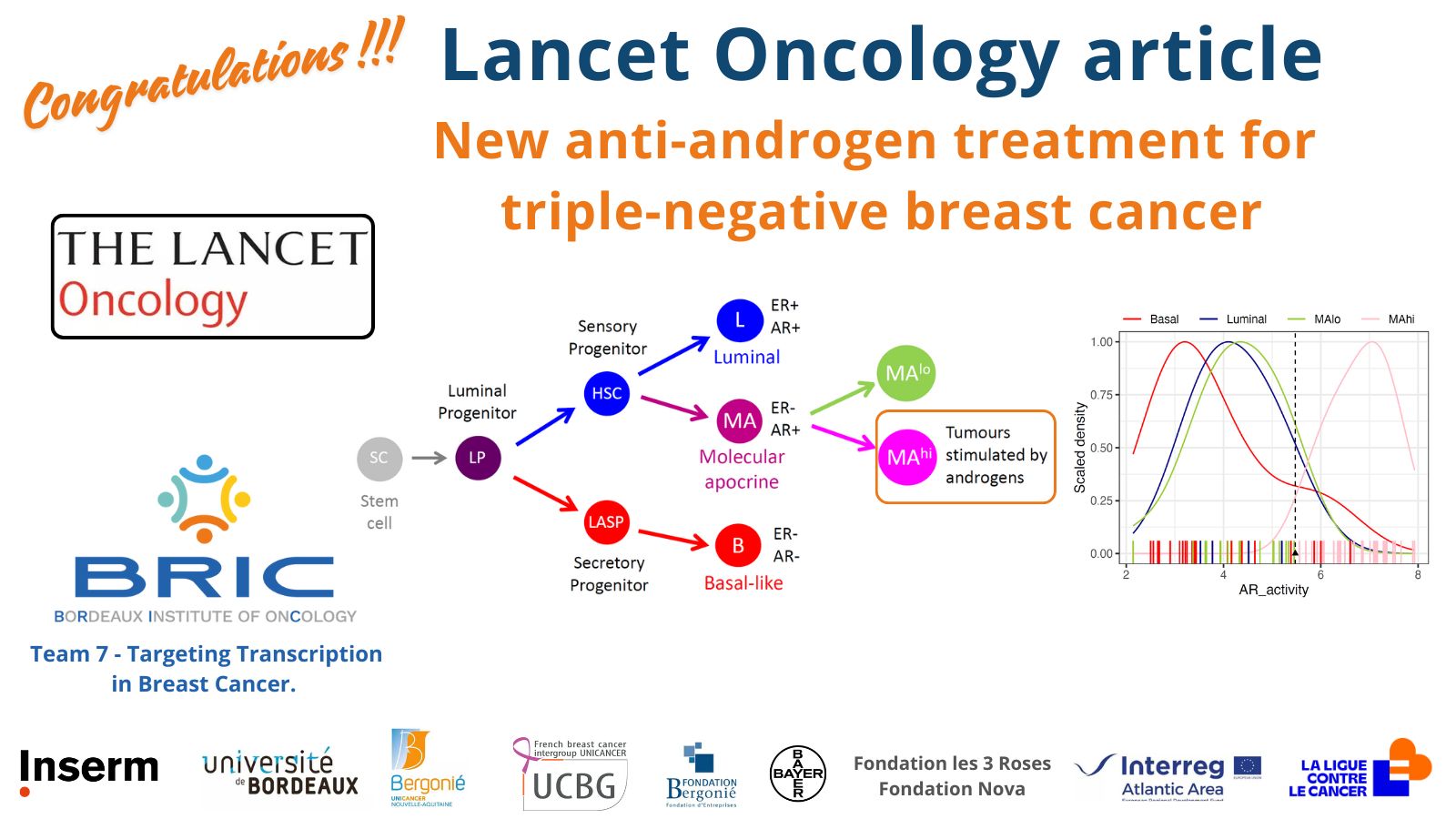
03 Mar Lancet Oncology article – New anti-androgen treatment for triple-negative breast cancer.
On this World Triple Negative Breast Cancer Day, we are pleased to congratulate the Team 7 – “Targeting Transcription in Breast Cancer”, headed by Pr. Martin Teichmann , whose work, led by Pr. Richard Iggo and Pr. Hervé Bonnefoi on a rare form of triple-negative breast cancer has been published in the prestigious Lancet Oncology. Their work on this rare form of cancer, in which the cancer cells express a high level of the androgen receptor, offers hope of a hormone treatment that is more tolerable than the chemotherapy treatments used to date. Clinical trials have yet to be set up to validate this treatment.
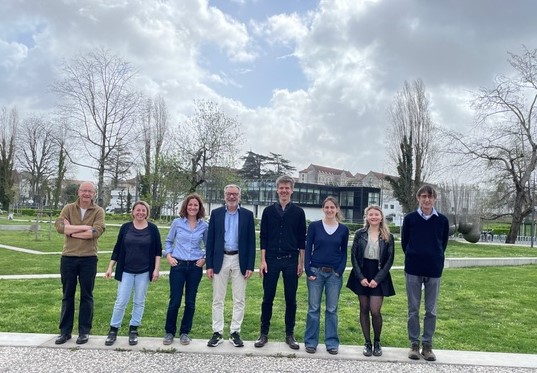
This work is the fruit of collaboration with researchers and clinicians, mainly in France: Institut Bergonié (Bordeaux), Institut Paoli-Calmettes (Marseille), Institut Curie (St Cloud), Centre Léon Bérard (Lyon), Oncopole Toulouse, Institut du Cancer de Montpellier and numerous hospital departments (Paris, Quimper, Caen, Villejuif, Orléans, Brest, Clermont-Ferrand, Angers, Charleroi).
Thanks to our supporters and funders: Bayer, Europe (Interreg BOTS grant), UniCancer Breast Group (UCBG), Fondation Bergonié, Fondation Nova (Geneva), La Ligue contre le cancer (comité des Landes et comité des Pyrénées Atlantiques), La Fondation les 3 Roses.
Explanations by Pr. Richard Iggo :
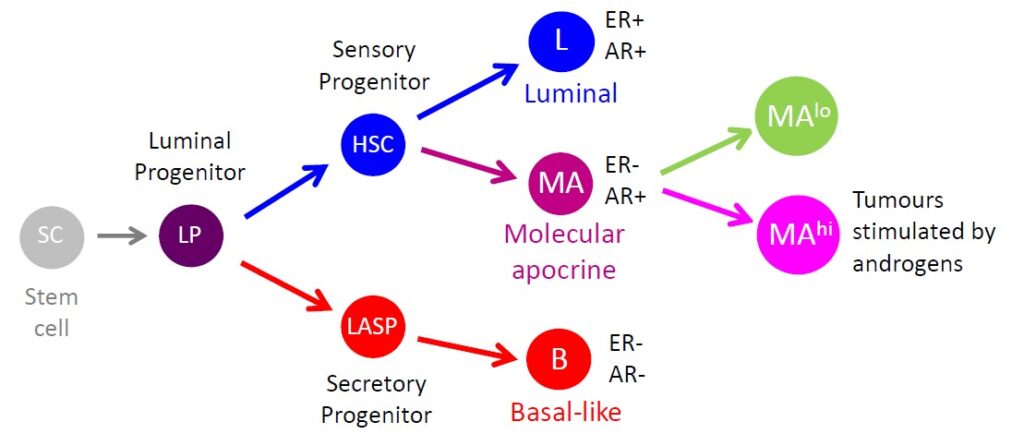
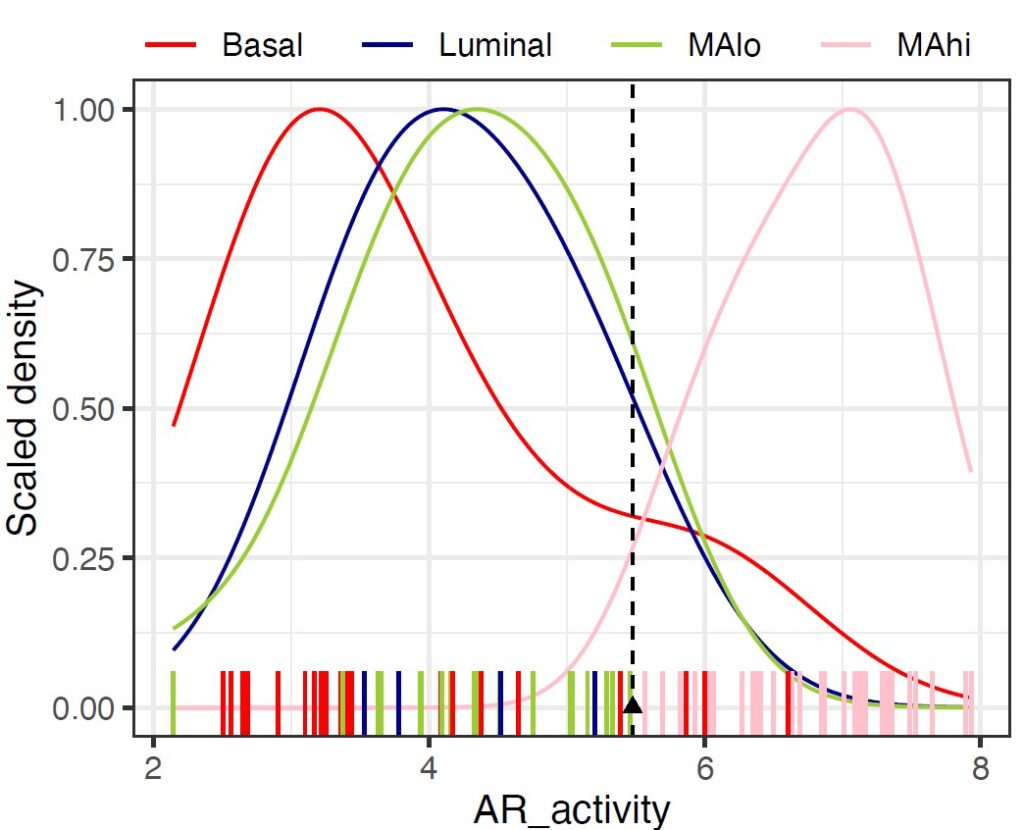
We proposed in 2005 that androgens replace oestrogens as the driver steroids in a subgroup of triple-negative breast cancer (TNBC) with androgen receptor (AR) expression called molecular apocrine (MA) breast cancer. Here, we report the analysis of a clinical trial evaluating the antitumour activity of the anti-androgen darolutamide in MA breast cancer. Transcriptomic analysis was used to classify tumours into groups with high and low AR activity (MAhi and MAlo). The primary translational endpoint was clinical benefit rate at 16 weeks. In patients treated with darolutamide, the clinical benefit rate was 57% (12 of 21; 95% CI 36–78) in MAhi tumours, and 16% (five of 31; 95% CI 3–29; p=0·0020) in other tumours. We conclude that high AR activity identifies a subgroup of patients with AR-positive, ER-negative breast cancer who are candidates for treatment with anti-androgens. This means we now have a coherent framework in which to target AR in breast cancer:
- in ER-positive tumours use androgen agonists
- in MAhi tumours use androgen antagonists
- in the remaining groups do not use hormonal therapy.
Hervé Bonnefoi, Florence Lerebours, Marina Pulido, Monica Arnedos, Olivier Tredan, Florence Dalenc, Séverine Guiu, Luis Teixeira, Delphine Mollon, Christelle Levy, Benjamin Verret, Heba Dawood, Laura Deiana, Marie-Ange Mouret Reynier, Paule Augereau, Jean-Luc Canon, Noémie Huchet, Clara Guyonneau, Jérôme Lemonnier, Gaetan MacGrogan, Anthony Gonçalves, Elodie Darbo, Richard Iggo Lancet Oncology Published online February 17, 2025

